
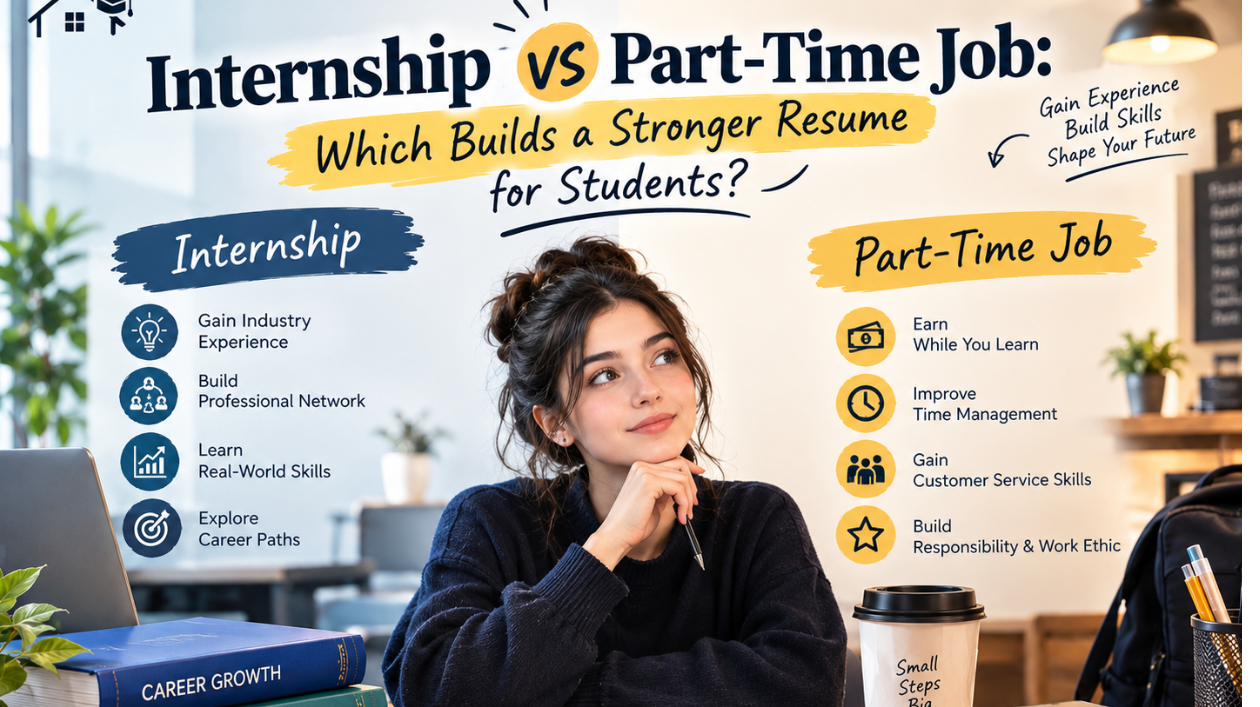
At some point during college, almost every student faces the same question: should I take an internship, or should I get a part-time job? Both options take up your time and energy, but they don't offer the same value—especially when it comes to building a resume that stands out to future employers.
The right choice isn't the same for everyone. It depends on your career goals, your financial situation, and what stage of your degree you're at. Here's a clear breakdown to help you decide.
1. What Each Option Actually Offers
**Internships** are typically tied to your field of study. They're designed to give you hands-on, industry-specific experience—working on real projects, using tools and software relevant to your career, and often working closely with professionals in your intended field.
**Part-time jobs**, on the other hand, are usually more general. Think retail, food service, tutoring, or administrative work. They may or may not relate to your career path, but they still teach valuable, transferable skills like time management, communication, and responsibility.
Neither option is "better" in every situation—they simply serve different purposes.
2. Impact on Your Resume
This is where the difference becomes clearer.
An internship directly strengthens the "Experience" section of your resume in a way that's relevant to the jobs you'll apply for after graduation. A line like "Marketing Intern at XYZ Company—assisted in running social media campaigns that increased engagement by 20%" speaks directly to a recruiter hiring for a marketing role.
A part-time job, unless it's closely related to your field, tends to demonstrate soft skills rather than technical or industry-specific ones. It shows reliability and work ethic, but it may not immediately signal "this person is ready for this specific career."
That said, a part-time job isn't a weak point on a resume—it's simply a different kind of strength.
3. Skill Development: Technical vs Transferable
Internships usually build **technical, career-specific skills**:
- Using industry software or tools
- Understanding real workplace processes in your field
- Applying classroom knowledge to actual projects
Part-time jobs usually build **transferable soft skills**:
- Customer service and communication
- Multitasking under pressure
- Working within a team, often with people from different backgrounds
- Basic financial responsibility and independence
Both sets of skills matter to employers—but if a recruiter is hiring specifically for your field, technical experience from an internship often carries more direct weight.
4. Networking Opportunities
Internships tend to offer stronger networking opportunities. You're working alongside professionals in your intended industry, which means potential mentors, references, and even future job offers can come directly from that experience. Many students land their first full-time job through a company they interned with.
Part-time jobs can still lead to valuable connections, especially if you build strong relationships with supervisors or colleagues, but the networking is usually less directly tied to your career field.
5. Financial Considerations
Here's where things get more practical: many internships are unpaid or low-paying, especially for students, while part-time jobs almost always offer steady income.
If you're financially dependent on your own earnings to cover tuition, rent, or daily expenses, an unpaid internship may not be realistic—and that's a completely valid reason to choose a part-time job instead.
The good news is this isn't always an either-or decision. Some students manage a part-time job during the semester and pursue internships during summer or winter breaks, when they have more flexibility.
6. Which One Should You Choose?
Consider your situation honestly:
**Choose an internship if:**
- You want direct, resume-relevant experience in your field
- You're closer to graduation and need to build industry connections
- You can manage financially, even with lower or no pay
**Choose a part-time job if:**
- You need consistent income to support yourself
- You're earlier in your degree and still exploring career interests
- You want to build general work experience and responsibility first
**Consider doing both, at different times, if:**
- You can work a part-time job during the semester and pursue internships during breaks
- You want to balance financial stability with career-building experience
7. What Matters Most in the End
Regardless of which path you choose, what actually strengthens your resume isn't just the title of the position—it's what you did with it. A part-time job where you took initiative, solved problems, or took on extra responsibility can be just as impressive as an internship where you simply completed routine tasks.
When listing either experience on your resume, focus on specific contributions and results, not just job duties. Recruiters respond to impact, not just titles.
### Final Thoughts
There's no universal right answer between an internship and a part-time job—it depends on where you are in your academic journey and what you need most right now, whether that's income, experience, or industry exposure. Ideally, most students benefit from a mix of both at different points in their degree.
What matters most isn't which one you choose, but how intentionally you use the opportunity to build real skills, relationships, and a resume that genuinely reflects your growth.