
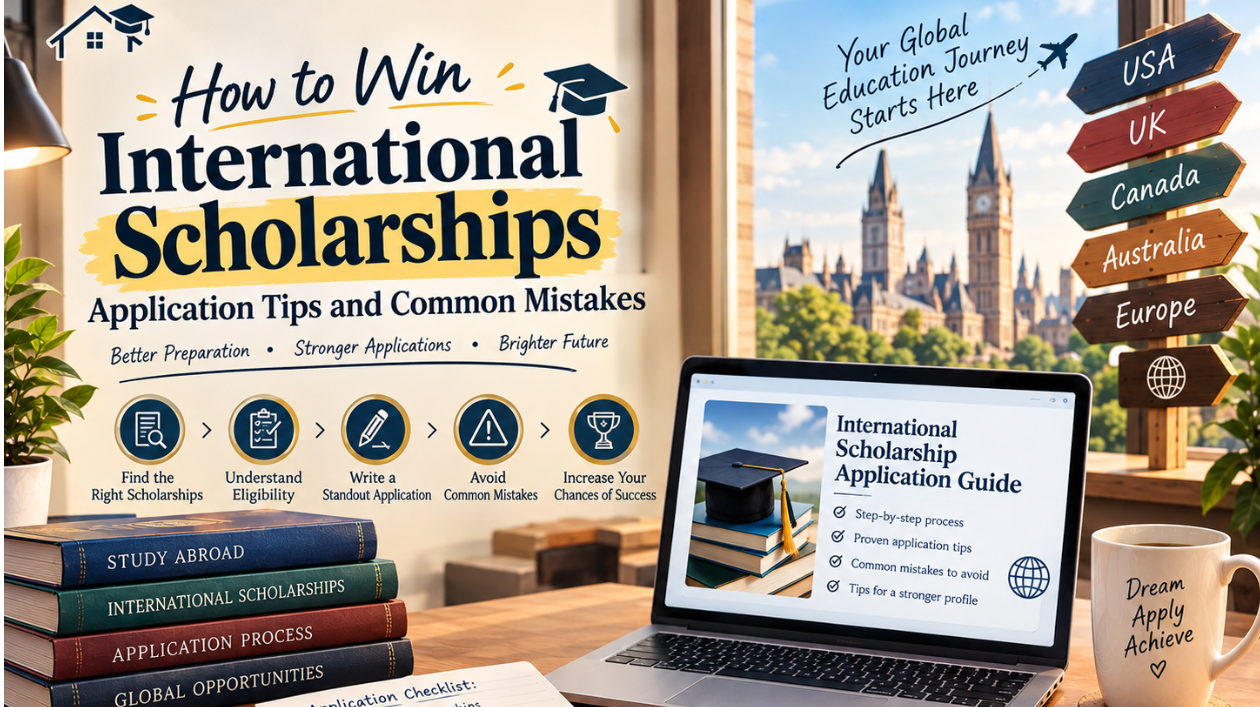
Every year, thousands of students apply for international scholarships, but only a small percentage actually get selected. The difference often isn't just academic merit—it's how well the application is planned, written, and presented. If you're aiming to fund your education abroad, understanding what scholarship committees actually look for can significantly improve your chances.
Here's a practical guide to help you build a strong application and avoid the mistakes that commonly lead to rejection.
1. Start Early and Research Thoroughly
One of the biggest advantages successful applicants have is time. Scholarship applications often require essays, recommendation letters, transcripts, and sometimes interviews—all of which take time to prepare properly.
Start by researching scholarships that match your:
- Academic background and field of study
- Nationality or region (many scholarships are country-specific)
- Career goals and future plans
Make a list of deadlines well in advance, since missing a deadline by even a day can disqualify an otherwise strong application.
2. Understand the Scholarship's Purpose
Every scholarship exists for a reason—some aim to support underrepresented students, some focus on leadership potential, others on academic excellence or a specific field like STEM or public policy.
Before applying, read the scholarship's mission and eligibility criteria carefully. Ask yourself: does my background, goals, and story genuinely align with what this scholarship is trying to support? Applying to scholarships that don't match your profile is one of the most common reasons for rejection.
3. Write a Strong, Personal Statement
Your personal statement or essay is often the most important part of your application. Avoid generic statements like "I have always been passionate about helping people." Instead, focus on:
- A specific experience or turning point that shaped your goals
- Concrete examples of your achievements or challenges you've overcome
- A clear connection between your past, your field of study, and your future plans
Committees read hundreds of essays, so authenticity and specificity stand out far more than polished but generic writing.
4. Choose the Right Recommenders
A recommendation letter carries more weight when it comes from someone who knows your work closely—not necessarily the most senior person you know. Choose a professor, supervisor, or mentor who can speak in detail about your abilities, work ethic, and character.
When requesting a letter, give your recommender enough time (at least 2–3 weeks) and provide them with your resume, achievements, and a brief note on the scholarship's focus so they can tailor the letter accordingly.
5. Tailor Every Application
A common mistake students make is submitting the same generic essay and documents to multiple scholarships without adjusting them. Reviewers can usually tell when an application feels copy-pasted.
Take time to:
- Adjust your essay to reflect each scholarship's specific values and goals
- Highlight different experiences depending on what each scholarship prioritizes
- Follow the exact word limits and formatting guidelines given
Small, thoughtful adjustments can make a big difference in how genuine your application appears.
6. Prepare for Interviews (If Required)
Some scholarships include an interview round. If you're selected, prepare by:
- Reviewing your own application thoroughly, since interviewers often ask about specific points you've written
- Practicing clear, honest answers about your goals and motivations
- Preparing a few thoughtful questions to ask the panel
Confidence matters, but so does honesty—avoid rehearsed answers that sound overly scripted.
7. Avoid Common Application Mistakes
Many strong candidates get rejected due to avoidable errors, such as:
- Missing deadlines or submitting incomplete documents
- Ignoring word limits or formatting instructions
- Submitting essays with grammar or spelling errors
- Failing to proofread personal statements for clarity and tone
- Applying to scholarships that don't match their academic or career profile
- Sending generic, unedited recommendation letter requests
Reviewing your entire application at least twice—preferably with a second person's feedback—can help catch these mistakes before submission.
8. Apply to Multiple Scholarships
Scholarship competition is high, and even excellent applicants face rejection due to limited seats. Rather than relying on one opportunity, apply to multiple scholarships that align with your profile. This increases your chances while also giving you practice in refining your essays and application materials over time.
### Final Thoughts
Winning an international scholarship takes more than good grades—it requires careful planning, genuine self-reflection, and attention to detail. Start early, tailor each application, and avoid the common mistakes that hold many students back.
Rejection is a normal part of the process, even for strong candidates. What matters most is learning from each application and continuing to apply with a clear, well-prepared strategy.