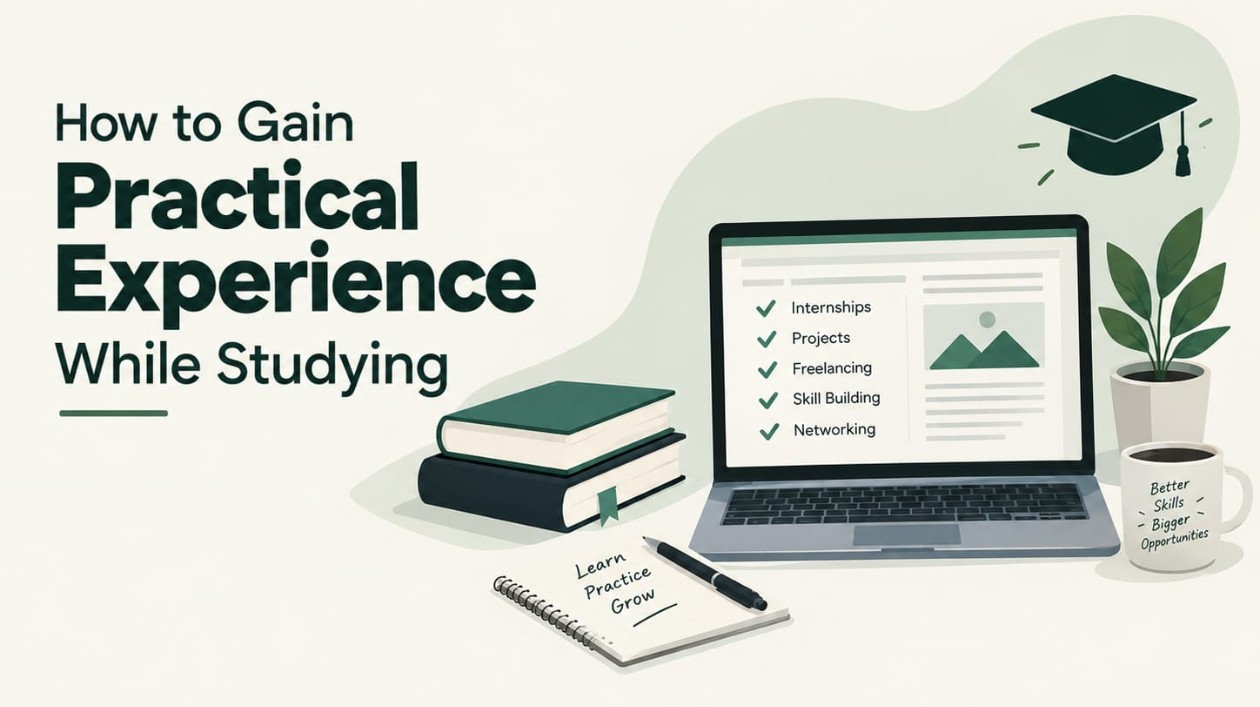
A college degree provides students with valuable theoretical knowledge, but practical experience can help turn that knowledge into real-world skills. Gaining experience while studying can strengthen your CV, build confidence, expand your professional network, and help you understand what employers expect. The good news is that students don't have to wait until graduation to start gaining practical experience.
1. Look for Internships
Internships are one of the most effective ways to gain hands-on experience while studying. Look for opportunities related to your degree, interests, or future career goals.
Internships can help you understand how a professional workplace operates while allowing you to apply what you have learned in the classroom.
Even a short-term internship can provide valuable experience if you actively participate and learn from the work.
2. Work on Real-World Projects
You don't always need a formal job or internship to gain practical experience. Working on real-world projects can help you develop skills that employers value.
For example, a computer science student could build a website or software application, while a business student could develop a marketing plan or analyze a company's business strategy.
Keep a record of your projects and include your strongest work in your portfolio or CV.
3. Join Student Organizations
University clubs and student societies can provide opportunities to develop practical skills outside the classroom.
Taking responsibility for events, social media, finances, marketing, or team management can help students develop communication, leadership, organization, and problem-solving skills.
Choose activities that allow you to take an active role rather than simply becoming a member.
4. Volunteer Your Skills
Volunteering can be another valuable way to gain experience. Look for organizations, events, educational programs, or community projects where you can contribute your existing skills.
For example, students interested in graphic design can help create promotional materials, while students interested in technology can assist with websites or digital projects.
Volunteering can also help you build professional connections and demonstrate initiative.
5. Take Freelance or Part-Time Work
Students with marketable skills can consider freelance or part-time opportunities that fit around their academic schedule.
Writing, graphic design, programming, video editing, digital marketing, tutoring, and data-related skills can all provide opportunities to work on real projects.
Start with manageable projects and focus on building quality work and reliable professional habits.
6. Participate in Competitions and Hackathons
Academic competitions, case competitions, coding challenges, hackathons, and similar events allow students to solve practical problems within a limited time.
These activities can improve teamwork, creativity, communication, and problem-solving skills.
They can also give you projects and achievements that you can discuss during internship or job applications.
7. Build a Professional Portfolio
A portfolio allows you to demonstrate what you can actually do rather than simply listing skills on your CV.
Depending on your field, your portfolio could include software projects, research work, writing samples, designs, presentations, marketing campaigns, photography, or other relevant work.
Keep it organized and regularly update it as you gain new experience.
8. Connect With Professionals
Networking can help students discover opportunities that may not always be advertised publicly. Attend university career events, workshops, conferences, seminars, and industry meetups whenever possible.
You can also connect with professionals and alumni through platforms such as LinkedIn.
When reaching out, be professional and focus on learning and building genuine professional relationships rather than immediately asking for a job.
## Turn Your Experience Into Career Opportunities
Practical experience doesn't have to come from a full-time job. Internships, projects, volunteering, student organizations, freelance work, competitions, and networking can all help students develop valuable professional skills while completing their degrees.
Start with opportunities that fit your schedule and are relevant to your interests. Over time, these experiences can help you build a stronger portfolio, understand your career goals, and become better prepared for life after graduation.