
## Article 5
Moving abroad for higher education isn't just a change of location—it's often a completely different way of learning. Many international students, even strong ones, struggle in their first semester not because of ability, but because the academic culture works differently from what they're used to back home.
Understanding these differences early can save you a lot of stress and help you perform better from day one. Here's what usually catches students off guard, and how to adjust to it.
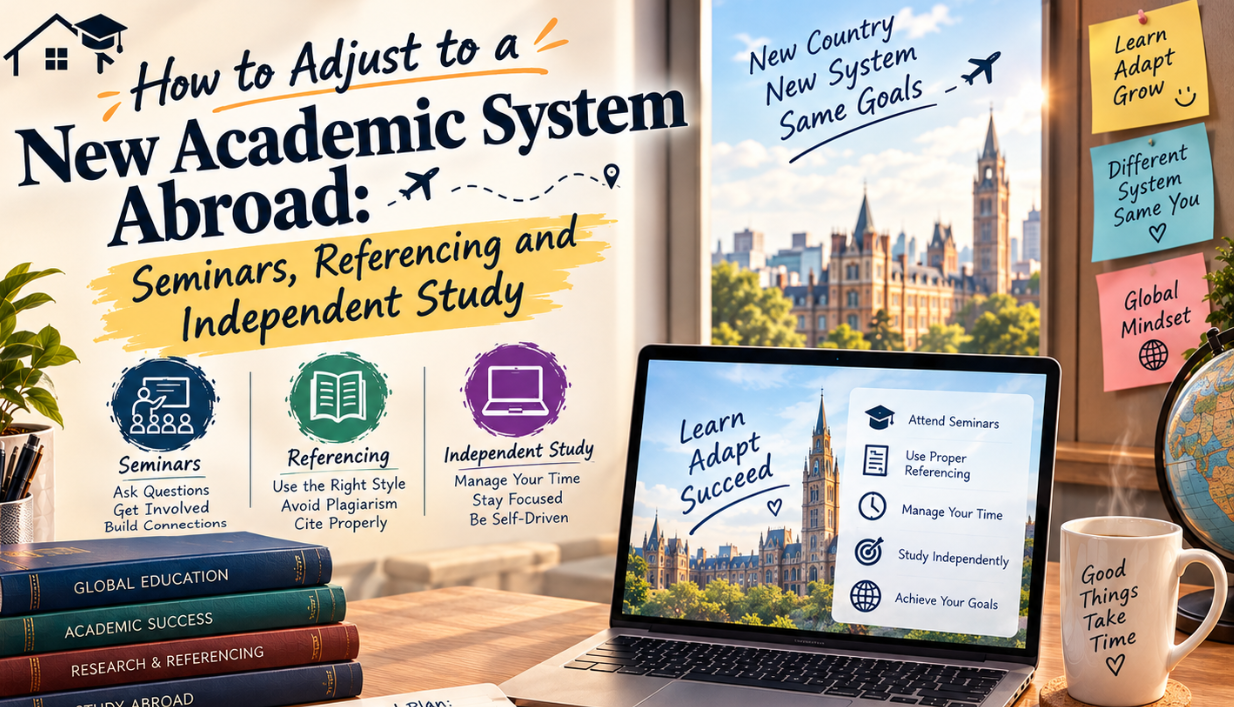
1. Understand That Seminars Aren't Lectures
In many countries, especially the UK, Europe, and North America, seminars are a core part of academic life—and they work very differently from lectures.
In a lecture, you mostly listen and take notes. In a seminar, you're expected to:
- Come prepared, having done the assigned reading beforehand
- Actively participate in discussion
- Share your own opinions and challenge others' ideas respectfully
Staying silent throughout a seminar isn't seen as respectful or humble in most Western academic settings—it's often seen as being unprepared or disengaged. Participation usually contributes to your grade, sometimes directly.
**Tip:** Even if you're unsure about your opinion, prepare two or three points or questions before each seminar so you have something ready to contribute.
2. Learn to Reference Properly—And Early
Referencing systems like APA, Harvard, MLA, or Chicago are taken very seriously abroad, far more strictly than many students expect. Every idea, statistic, or quote you take from a source—even if you've reworded it—needs to be credited properly.
This isn't just about following rules; it's about academic honesty. Many international students unintentionally commit plagiarism simply because they didn't realize that even paraphrased ideas require citation.
To avoid this:
- Learn your university's required referencing style as soon as possible
- Use citation tools like Zotero, Mendeley, or your university's library resources
- Ask your academic writing center for guidance if you're unsure—most universities offer this support specifically for international students
3. Get Comfortable with Independent Study
Back home, many students are used to a more structured, teacher-guided approach. Abroad, especially at the university level, a large portion of learning happens outside the classroom, through independent study.
This means:
- Lecturers often expect you to read ahead, not just review after class
- Assignments may require you to research topics that weren't directly taught
- You're expected to manage your own study schedule without constant reminders
This shift can feel overwhelming at first, but it's designed to build critical thinking and self-reliance, which are valued heavily in most Western academic systems.
**Tip:** Build a simple weekly study routine early in the semester rather than waiting until deadlines pile up. Treat independent study time as seriously as scheduled classes.
4. Understand Different Expectations Around Critical Thinking
In many academic systems abroad, simply repeating what a textbook or professor said isn't enough. You're expected to:
- Analyze information rather than just summarize it
- Compare different viewpoints or theories
- Form and defend your own argument, supported by evidence
If you're used to a system that rewards memorization, this shift can be challenging initially. It helps to ask yourself, while reading or preparing assignments, "What's my own view on this, and why?"
5. Don't Hesitate to Use Support Services
Most universities abroad offer dedicated support for international students, including:
- Academic writing centers
- Study skills workshops
- International student advisors
- Office hours with professors
Many students hesitate to use these services, assuming they should already know everything. In reality, these resources exist specifically because the transition is difficult, and using them is a sign of good academic judgment, not weakness.
6. Build Relationships with Professors
In many academic cultures abroad, professors are more approachable than students initially expect. Attending office hours, asking questions after class, or emailing for clarification is normal and often encouraged.
Building this relationship early can help you:
- Get better feedback on your work
- Gain clarity on expectations before assignments are due
- Potentially find research or mentorship opportunities later on
### Final Thoughts
Adjusting to a new academic system takes time, and it's completely normal to feel out of step during your first few months. The key is to observe how the system works, ask questions early, and use the support available to you rather than trying to figure everything out alone.
Once you understand the rhythm of seminars, referencing expectations, and independent study, you'll likely find that this system builds skills—confidence in your own voice, careful research habits, and independent thinking—that stay with you well beyond graduation.