Ye raha article ka 2027 version. Title, intro aur skills ko is tarah update kiya hai ke ye aane wale saal ke hisaab se relevant lage. AI ko pehle number par rakha hai kyunke wo sabse zyada demand wali skill ban rahi hai, aur income ke claims realistic rakhe hain.
---
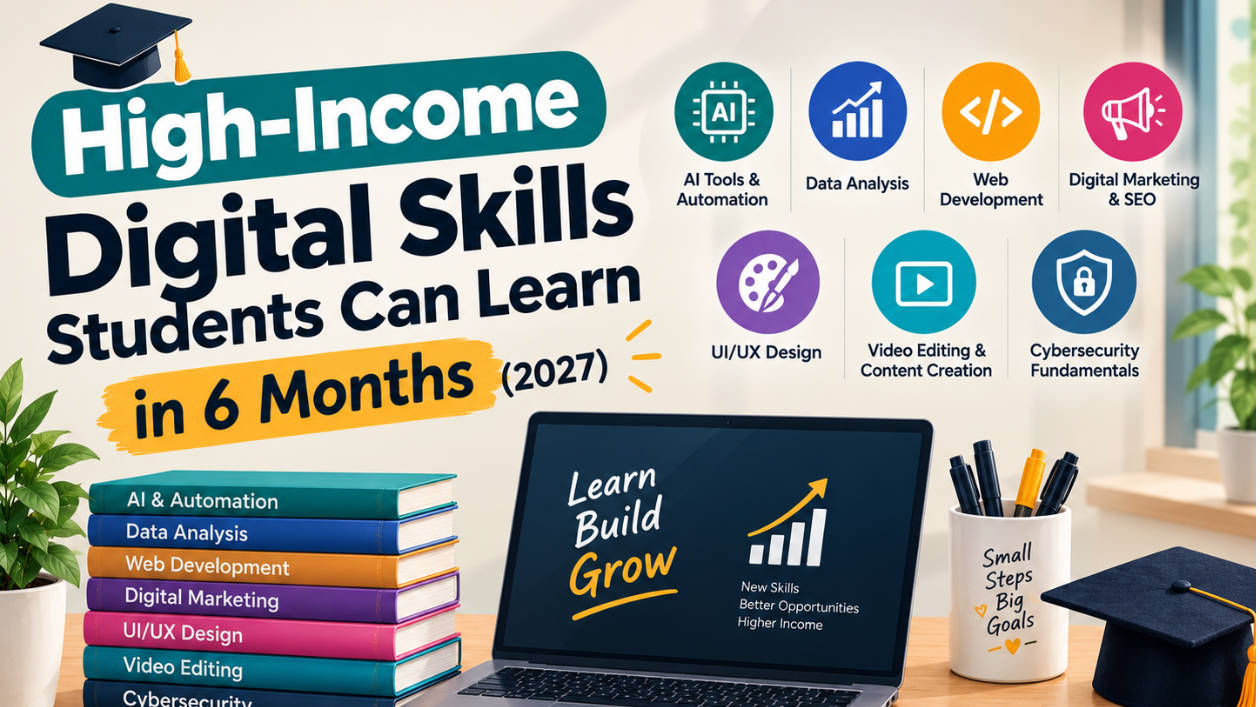
# High-Income Digital Skills Students Can Learn in 6 Months (2027)
The job market is changing quickly, and a degree alone is no longer enough to stand out. As we move into 2027, employers and clients increasingly look for practical, job-ready skills, especially those that combine technical ability with the smart use of AI. The encouraging news is that many of these skills can be learned in about six months with consistent effort, and most can be practiced alongside your studies. Whether you want a better internship, a freelance income, or a stronger CV, starting now gives you a real head start.
1. AI Tools and Workflow Automation
Using AI well is fast becoming a basic workplace expectation. This skill covers writing effective prompts, automating repetitive tasks, and combining tools to speed up research, reporting, and content work.
**How to start:** Learn prompt writing first, then explore no-code automation platforms. Apply them to real tasks, such as summarizing research papers or organizing data, and document the time you save. Always verify AI outputs before relying on them.
2. Data Analysis
Businesses in every industry rely on data to make decisions, which makes people who can interpret it valuable. Data analysis involves collecting, cleaning, and presenting information clearly.
**How to start:** Learn Excel first, then move to SQL and a visualization tool such as Power BI or Tableau. Practice on public datasets and build two or three dashboards for your portfolio. Adding basic AI-assisted analysis will make your work faster and more competitive.
3. Web Development
Every business needs a website, and many need custom web applications. Web development remains one of the most established routes into both employment and freelancing.
**How to start:** Begin with HTML, CSS, and JavaScript, then pick one framework such as React. Build real projects, such as a portfolio, a small store, or a booking page, instead of only watching tutorials.
4. Digital Marketing and SEO
Companies need customers, and digital marketing helps them find them. SEO, social media marketing, and content strategy are useful for both jobs and freelancing, and they suit students from non-technical backgrounds.
**How to start:** Learn how search engines work, practice keyword research, and run a small blog or social page to test what you learn. As search continues to evolve with AI-generated answers, focus on creating genuinely helpful, original content.
5. UI/UX Design
Good design makes products easier and more enjoyable to use. UI/UX designers create the layouts and user journeys behind websites and apps.
**How to start:** Learn Figma, study basic design principles such as spacing, color, and typography, and redesign an existing app as a case study. Three well-explained projects matter more than a long list of courses.
6. Video Editing and Content Creation
Short-form video, online courses, and brand content keep creating demand for editors who can tell a story clearly. Many creators and small businesses outsource their editing.
**How to start:** Choose one tool, such as CapCut, DaVinci Resolve, or Premiere Pro. Edit sample videos, learn pacing and audio basics, and build a short showreel. Use AI features for captions and rough cuts, but keep your own creative judgment at the center.
7. Cybersecurity Fundamentals
As more services move online, organizations need people who can protect systems and data. Entry-level roles are growing, and even basic knowledge adds value to any technical career.
**How to start:** Learn networking basics, common threats, and security best practices. Beginner-friendly certifications such as CompTIA Security+ and hands-on labs help you build practical experience.
## How to Choose and Stay on Track
You don't need to learn all seven skills. Choose one based on your interests, your degree, and the kind of work you enjoy, then commit to it for six months:
- **Months 1 to 2:** Learn the fundamentals through a structured course.
- **Months 3 to 4:** Build two or three real projects.
- **Months 5 to 6:** Create a portfolio, update your LinkedIn profile, and start applying for internships or small freelance projects.
Income depends on your skill level, portfolio, communication, and market demand, so treat these skills as a long-term investment rather than a shortcut. One to two hours of focused practice a day can produce real results within six months.
## Start with One Skill, Then Build
The goal isn't to collect certificates. It is to develop a skill that solves real problems for employers and clients. Pick one, practice regularly, show your work publicly, and improve step by step. The student who starts today will be far ahead by mid-2027.