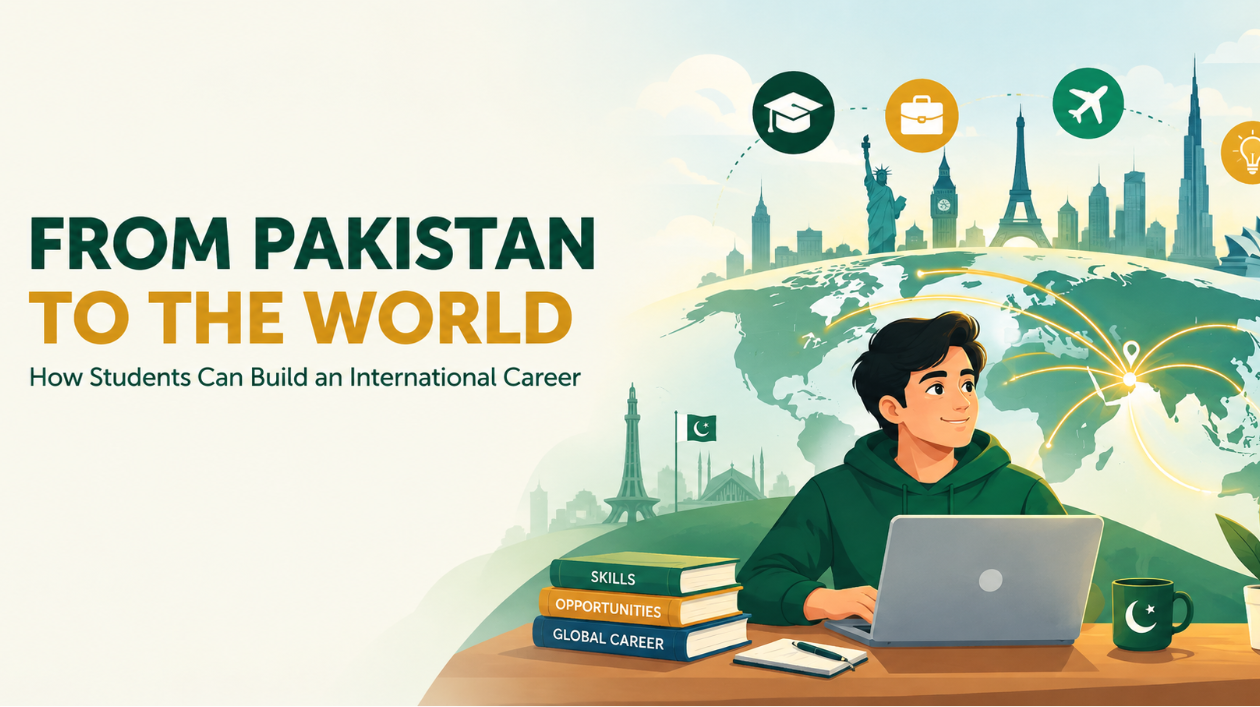
FROM PAKISTAN TO THE WORLD: HOW STUDENTS CAN BUILD AN INTERNATIONAL CAREER
Introduction
You don't have to leave Pakistan to build a global career, and you don't have to be from a famous university either. Pakistani students are working with international companies, winning scholarships abroad, freelancing for clients worldwide, and building careers across borders. What they share isn't luck or connections. It's skills, preparation, and a clear plan. Here is a practical roadmap you can start following today, even as a student.
First, Let's Clear Some Myths
"You need to move abroad to have an international career." Not always. Remote work and freelancing let many people work for global clients from home.
"Only top universities matter." Reputation helps, but skills, projects, and results matter a lot to many employers.
"You need a lot of money." Scholarships, funded programs, and remote work provide routes that don't depend on family wealth.
"It's too late for me." People start at different ages and stages. The best time to begin is now.
Step 1: Choose a Skill That Travels
Some skills are valued across borders. Think about which of these fits you:
Software development and IT
Data analysis and AI
Graphic design, UI/UX, and video editing
Digital marketing and content writing
Engineering, healthcare, and sciences
Finance, accounting, and business analysis
Pick one direction and go deep instead of learning ten things halfway.
Step 2: Build Real Proof of Your Skills
International employers can't easily judge a degree from an unfamiliar institution, so show them what you can do:
Build a portfolio with 3-5 strong projects
Publish work on platforms like GitHub, Behance, or a personal website
Complete free or low-cost online courses and apply what you learn
Contribute to open-source projects or volunteer work
Take part in competitions and hackathons
Step 3: Improve Your English and Communication
Clear written and spoken English is a big advantage. Practice by:
Writing short posts or articles regularly
Speaking in online communities, meetings, or study groups
Watching and reading content in your field in English
Preparing for a language test if you plan to study or migrate (IELTS, TOEFL, or similar)
Step 4: Aim for Scholarships and Funded Programs
Scholarships are one of the most realistic international routes for students without big savings. Programs to explore include:
Chevening and Commonwealth (UK)
Fulbright (USA)
DAAD (Germany)
Stipendium Hungaricum (Hungary)
Türkiye Burslari (Türkiye)
Chinese Government Scholarship, MEXT (Japan), and GKS (South Korea)
Requirements, deadlines, and availability for Pakistani students change every year, so check the official websites and start early.
Step 5: Try Remote Work and Freelancing
Remote work is one of the easiest ways to gain international experience without leaving home.
Start on freelancing platforms, or find remote internships and jobs on LinkedIn and remote job boards.
Begin with small projects to gain reviews and confidence.
Be professional: reply on time, communicate clearly, and deliver quality work.
Check which payment methods work in Pakistan and understand any tax or registration rules that apply to your income.
Step 6: Build Your Online Presence
Recruiters and clients search for you online before they contact you.
Create a clean, complete LinkedIn profile with a clear headline
Share what you're learning and building
Follow and engage with people and companies in your field
Keep your portfolio and profile updated
Step 7: Network With Purpose
Opportunities often come through people.
Connect with alumni working abroad and ask for short, specific advice
Join professional communities and events, including online ones
Send polite, personalized messages instead of copy-paste requests
Offer value where you can, such as sharing resources or helping others
Step 8: Understand the Work Routes Abroad
If you want to work in another country, learn how its system works.
Many countries have skilled worker visas, employer-sponsored visas, and post-study work options.
Requirements depend on your profession, qualifications, and experience.
Some professions need recognition or licensing, such as medicine, law, and engineering.
Rules change often, so always confirm details on official immigration websites.
Step 9: Get Your Documents Ready
Prepare early to avoid delays:
Degrees and transcripts, with any required attestation, equivalence, or translation
Passport and identity documents
A strong CV tailored to international standards
Reference letters from teachers and supervisors
Proof of work or projects
Step 10: Be Patient and Persistent
Expect rejections, slow replies, and setbacks. Most people who build international careers apply many times, improve each round, and keep learning.
A Simple 12-Month Starter Plan
Months 1-3: Pick your skill, start a course, and improve your CV and LinkedIn profile.
Months 4-6: Build your first 2-3 portfolio projects and begin applying for internships or small freelance jobs.
Months 7-9: Prepare your language test and scholarship documents, and start networking seriously.
Months 10-12: Apply for scholarships, remote roles, and programs, and keep improving your portfolio.
Warning: Avoid Scams and Shortcuts
Be careful with anyone who:
Promises guaranteed jobs or visas abroad for a fee
Asks for money to "reserve" a scholarship or work permit
Offers fake experience letters or documents
Pressures you to decide quickly
Fake documents and false claims can lead to permanent bans and destroy your future chances. Use official websites and verified sources only.
Important Note
Visa rules, scholarship criteria, and job market conditions differ between countries and change regularly. This article is general guidance, not legal or immigration advice, so confirm all requirements with official government and university sources before making decisions.
Conclusion
An international career doesn't begin at an airport. It begins with the skills you build, the work you show, and the connections you make right now. Start small, stay consistent, and keep your goals clear. Whether you study abroad, work remotely, or eventually relocate, the path starts with the first step you take today.